Welcome to our used car market research hub for Kit Carson County, Colorado. If you are comparing prices across Burlington, Stratton, Flagler, Seibert, and nearby towns, this guide highlights current trends, typical price ranges by segment, and what matters most when buying in the Eastern Plains. We break down mileage norms, ownership history, seasonality, and rural use factors that influence value. You can review how trucks, SUVs, crossovers, and fuel-efficient commuters perform in this region and how days on market and condition impact negotiations. You will also find links to real inventory, recently sold examples, and county-by-county research to benchmark Kit Carson against neighboring markets. Use these insights to refine your budget, spot strong listings faster, and feel confident evaluating any vehicle you plan to purchase or trade.
This page focuses on local realities such as four season weather, farm and ranch usage, highway mileage patterns, and service availability that can affect value in Kit Carson County. Dive into practical checklists for inspections, title and history review, and financing considerations. For deeper comparisons, explore our used inventory, sold inventory, and nearby county research pages linked below.
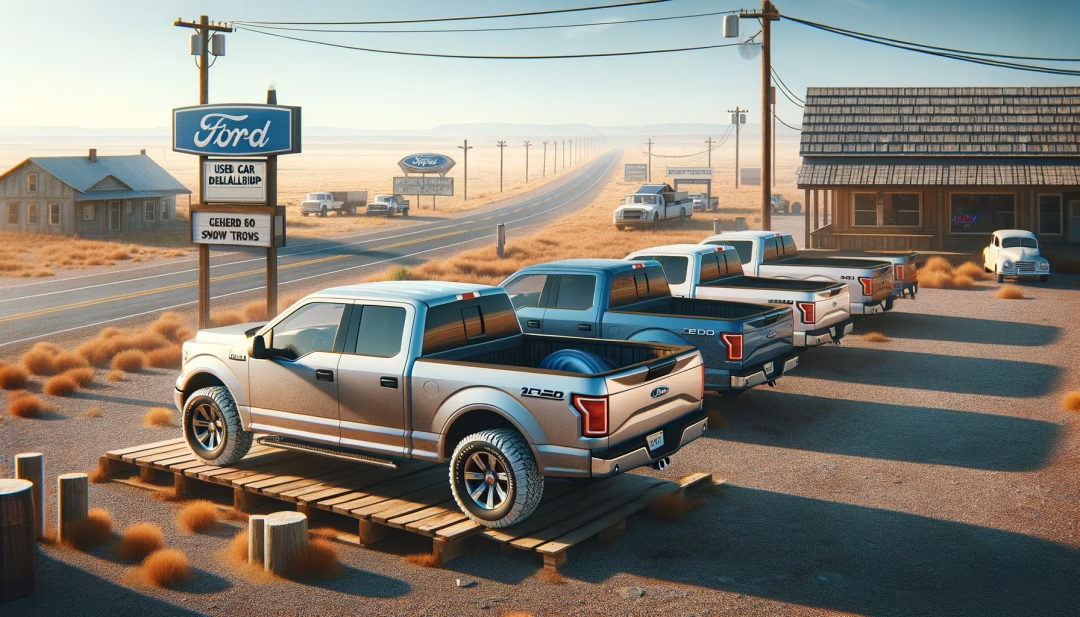
Kit Carson County’s used car market is shaped by wide open highways, agricultural work, and variable weather that ranges from hot summers to winter storms. Many vehicles accumulate steady highway miles on I 70 and US 385, and a significant share of local demand centers around pickups, body on frame SUVs, and crossovers with all wheel or four wheel drive. Sedans and compact cars remain attractive for commuters seeking lower fuel and ownership costs. Understanding these demand drivers helps set expectations for pricing and days on market.
In Kit Carson County, pricing varies by segment, powertrain, and equipment. Four wheel and all wheel drive options, tow packages, winter appropriate tires, and remote start systems raise desirability. Clean titles with consistent maintenance records command premiums. Vehicles with verified highway use often show lower drivetrain wear than stop and go city cars, but dust, gravel, and heavy duty tasks can impact paint, underbody, and suspension components. When comparing prices, always normalize for drive type, trim level, engine, mileage, and service documentation.
Seasonality affects demand and availability. Four wheel and all wheel drive vehicles tend to list and sell faster heading into fall and early winter. Spring can bring more inventory as owners upgrade and tax season improves purchasing ability. Fuel efficient models see renewed interest during fuel price spikes and harvest periods when secondary vehicles are needed for errand duty. Monitoring days on market trends and the number of comparable listings in adjacent counties helps you decide whether to act quickly or wait for better selection.
Pickup trucks, midsize and full size SUVs, and crossovers remain regional favorites thanks to versatility and road clearance. Compact sedans and hatchbacks appeal to commuters and students who want lower upfront costs and simpler maintenance. If you plan to tow or travel dirt and gravel roads often, verify tow ratings, cooling packages, suspension condition, and tire load ratings. For highway heavy use, look for driver assist features, adaptive cruise, and supportive seating for long stints.
A disciplined review process can prevent surprises and support better pricing decisions. Start with fundamentals and move to a road test. Compare the listing against at least three local and regional alternatives in similar condition to validate the ask price.
Budget beyond the purchase price to include title and taxes, insurance, service catch up, and a contingency for tires or unexpected repairs. In rural areas, consider the value of reliability, fuel economy on long highway stretches, and the convenience of modern driver assistance. A slightly higher purchase price with documented maintenance can be a smarter total cost choice than a cheaper vehicle with deferred work.
Financing terms reflect credit profile, vehicle age and mileage, and loan to value. Shopping the rate and term while verifying lender requirements for older or higher mileage vehicles ensures smooth closing. If credit is building or being re established, look at educational resources and second chance programs across Colorado to learn what documentation helps approval odds.
A thorough inspection is essential. Verify cold start behavior, idle smoothness, and 4x4 engagement if equipped. Look under the vehicle for fluid seepage and examine inner tire wear that suggests alignment or suspension attention. On the test drive, evaluate highway straight line stability, braking feel, steering return to center, transmission shift quality, and any binding or vibration in 4x4 modes. For trucks and SUVs, confirm hitch wiring and trailer brake controller operation if installed.
Documentation protects your investment. Validate VIN plates, title status, odometer readings, and lien releases. History reports help identify prior accidents, ownership changes, and service visits. For fleet or ranch vehicles, service logs may be outside typical dealer systems, so ask for paper or digital receipts. In Colorado, confirm emissions requirements based on county and transaction rules.
Trade in values reflect condition, local demand, and recon costs. Trucks and SUVs with service history, rust free frames, and quality tires score best. To prepare, gather maintenance records, address low cost reconditioning such as bulbs and wipers, and note all keys and accessories. Comparing regional prices for similar vehicles helps set a fair expectation before appraisal.
Inventory can shift quickly across county lines. If selection is tight locally, compare nearby areas to widen options and verify pricing. Eastern and central Colorado counties provide useful benchmarks for trucks, crossovers, and commuters. Reviewing these pages offers broader market context and may reveal better equipped vehicles or trims at similar prices.
Use our site resources to compare active listings, review previously sold vehicles, and learn more about financing and ownership in Colorado. Our blog and buyer guides deliver regional insights on maintenance, winter readiness, and inspection checklists that are especially useful for the Eastern Plains.
Explore additional resources, policies, and regional research to complete your market view.