Shopping for a reliable used car in Logan County is easier when you have a clear plan. This car buying guide for Logan County CO explains how to research vehicles, compare prices, understand financing, and complete Colorado paperwork with confidence. Begin by setting a realistic budget, reviewing your credit, and exploring inventory that fits Eastern Plains driving needs like highway range for US 6 and I 76, winter traction, and hail resilience. Compare options in our market insights and learn how features like all wheel drive, towing capacity, and advanced safety tech can impact total ownership cost. You can browse current vehicles on used-inventory and read helpful tips on blog. When you are ready to narrow choices, bring a valid license and insurance details, request vehicle history, and plan a thorough test drive on both city and rural roads around Sterling, Peetz, Fleming, and Merino. This local guide helps you move from research to registration with fewer surprises.
Helpful links: used-inventory | blog | car-buying-guide-denver-co | used-car-market-research-logan-co
Whether you are buying your first car or upgrading, this guide covers budgeting, trade in values, financing paths, and Colorado title steps tailored to Logan County drivers. Explore local market data on used-car-market-research-logan-co, and compare loan paths on used-car-financing-logan-co and second-chance-auto-financing-logan-co to match your goals. For questions, see contact-us and about-us.
Quick links: used-car-financing-logan-co | second-chance-auto-financing-logan-co | contact-us | about-us
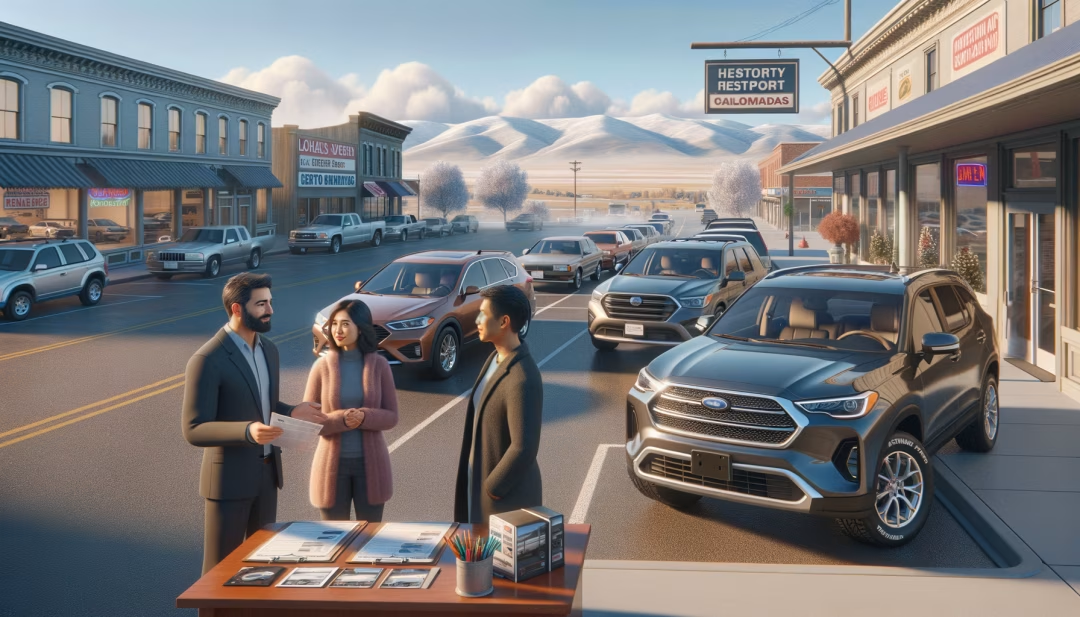
From Sterling to Iliff and Atwood, shoppers across Logan County face a unique mix of city errands, long rural commutes, and seasonal weather. The right used vehicle balances capability, comfort, and cost. Use the steps below to move efficiently from research to keys in hand, while avoiding hidden costs.
Start with a monthly budget that includes more than the payment. Add estimated insurance, fuel, maintenance, registration, and potential repairs. Consider how Eastern Plains driving affects costs. For example, a compact SUV with all wheel drive may save time during winter storms, while a fuel efficient sedan may reduce daily costs for long US 6 commutes.
Prioritize features that match local conditions. If you travel gravel roads or face drifting snow, taller ground clearance, all season or snow rated tires, and stability control help. For ranch or project work, a midsize pickup with a towing package and four wheel drive can be a smart value buy when compared to full size trucks.
Strong financing preparation can lower your total cost. Review your credit report, set a target payment range, and compare financing offers. If your credit is building or recovering, there are local paths designed to help.
After you find models you like on used-inventory, review vehicle history reports and service records. Confirm title status, mileage, prior accidents, open safety recalls, and any reported hail repairs. History data is one input. Always combine it with a hands on inspection and a comprehensive test drive.
A methodical test drive reveals more than a quick spin around the block. Aim for mixed speeds, a rough patch of pavement, and a safe open stretch to assess acceleration and braking. Pay attention to tire tread, rotor condition, suspension clunks, transmission shift quality, and steering feel at highway speed.
Paperwork is straightforward when you know the checkpoints. Most buyers will complete a bill of sale, secure the title, and register at the county level. In Colorado, emissions testing is generally required only in select Front Range program areas. Logan County buyers typically do not need an emissions test for registration, but you should verify current rules with local authorities before purchase. If the vehicle was previously titled out of state, Colorado requires a VIN verification before registration.
Fees and taxes can vary by city and time. Check current details with your local office before you finalize a deal. For general policy information and shopper rights, review visitor-agreement and privacy-policy.
If you have a trade in, gather your payoff letter, extra keys, service receipts, and any accessories. Cleaning the vehicle, addressing simple bulbs or wiper blades, and documenting recent maintenance can help your valuation. Research comparable sales, but remember that reconditioning, transport, and market risk affect dealer offers.
Used vehicles can qualify for limited warranties, vehicle service contracts, or maintenance packages. The right plan depends on mileage, model reliability, and your annual driving on rural highways. Read coverage terms, deductible levels, claim processes, and exclusions like wear items. Consider appearance or windshield protection in hail and gravel prone areas if it aligns with your risk tolerance.
Before you sign, review the buyers guide window form for warranty status, confirm the agreed price, fees, and taxes, and compare them to your financing terms. Ask for a copy of the inspection checklist and any reconditioning completed. Photograph the odometer reading, VIN, and key fobs for your records. Keep digital copies of the bill of sale, title application, and any financing disclosures in a safe folder.
Set reminders for your first oil change and tire rotation, add the vehicle to your insurance, and consider an alignment if you notice pull on the many wind exposed highways in the area. Update your maintenance log and store spare keys. If your vehicle has advanced driver assistance systems, read the manual sections for calibration and limitations on gravel or snowy roads.
Compare prices and availability across adjacent counties to find value opportunities. Inventory shifts quickly between rural and metro areas, and transportation from nearby markets can sometimes lower your total cost even after delivery. Explore recent data across the region below.
Vehicle availability, pricing, taxes, and regulations change. This guide is for general educational purposes and is not legal, tax, or financial advice. Confirm current registration, tax, emissions, and VIN verification requirements with state and county offices before purchase.