Welcome to our used car market research hub for Alamosa Colorado. If you are comparing prices, trims, mileage, or ownership costs in the San Luis Valley, this page brings together practical insights tailored to Alamosa driving and weather. You can reference real listings in our used inventory and review recent sales in our sold inventory to understand pricing trends and availability. We also share local factors that influence value, such as altitude performance, snow readiness, gravel road durability, and rural hauling needs. Whether you commute on US 160, explore the Great Sand Dunes, or need a family ready SUV for four seasons, the research below will help you evaluate options clearly. For deeper how to guides, visit our blog or learn more about our team on about us. Use this page to compare, verify, and plan your next purchase with confidence.
Below you will find a comprehensive breakdown of the Alamosa used vehicle landscape, including common price drivers, vehicle types that fit local roads and weather, ownership cost checklists, and how to read listings for real value. You will also find helpful internal links for research, neighboring county comparisons, and an in depth FAQ with local market answers. Keep this page open while you shortlist vehicles.
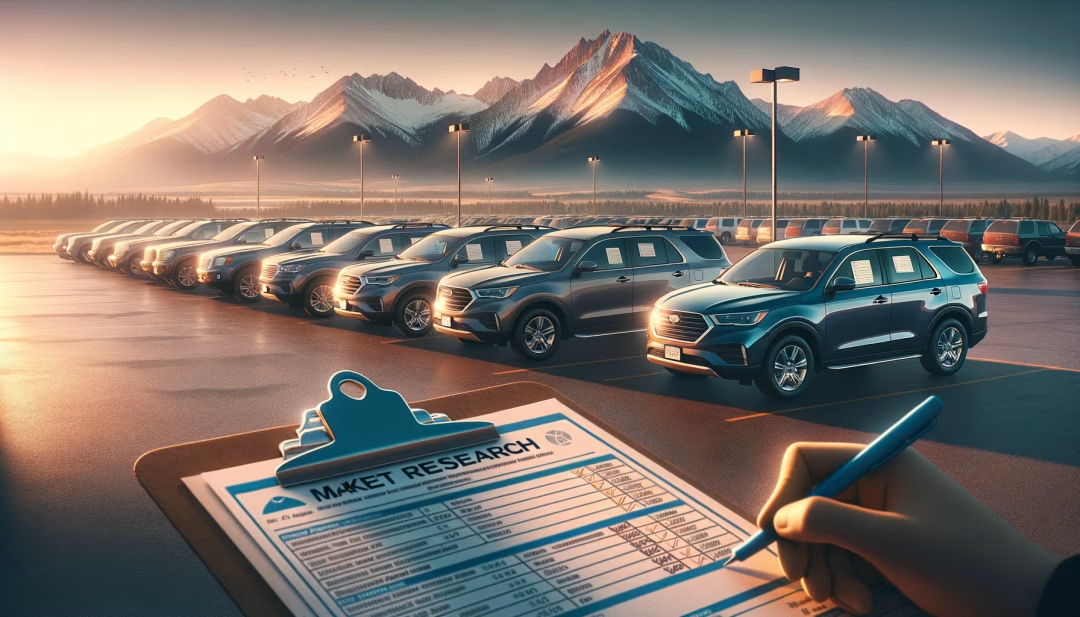
Alamosa sits in the San Luis Valley, where elevation, temperature swings, and winter weather all shape demand. Shoppers commonly look for crossovers and SUVs with all wheel drive, half ton and three quarter ton pickups for work and recreation, and fuel efficient compacts for daily use around town and to campus. Because rural trips can be long, reliability, tire life, and fuel economy matter. Vehicles that are well maintained, have rust prevention, strong heating, and proven cold start performance tend to hold value better. You will also see seasonal shifts, with winter ready models receiving more attention from late fall through early spring, while convertibles and sporty coupes see interest rise in summer.
Price in a high elevation market is influenced by mileage, model year, trim, drivetrain, tire quality, maintenance records, accident history, and local fit. To understand value, study active listings and sold examples side by side. Use our used inventory to sample asking prices and our sold inventory to see how similar vehicles have transacted recently. Compare apples to apples: the same engine, drivetrain, options, mileage band, and condition notes. Then adjust your range for items that cost real money in the Valley, like snow rated tires, block heaters, or upgraded cooling for towing. A vehicle priced slightly higher but with full service records and new winter tires can be a smarter total cost choice than a lower sticker with deferred maintenance.
Alamosa driving includes town streets, open highway stretches on US 160 and US 285, gravel county roads, and mountain approaches. Choose features that match this diversity. All wheel drive or four wheel drive improves confidence when roads are slick or unplowed. Higher ground clearance helps on rutted surfaces. If you plan to tow campers, ATVs, or small livestock trailers, focus on engine torque, transmission cooling, integrated trailer brake controllers, and appropriate axle ratios. For families, prioritize safety tech that proves useful in winter, like stability control, heated mirrors, and remote start for cabin warmup. Students and commuters may prefer compact hatchbacks or small crossovers with strong fuel economy, yet still consider tires that carry the three peak mountain snowflake designation for real winter traction.
Smart research includes total cost over time, not just the asking price. In Alamosa, plan for winter tires or all weather sets, battery replacement cycles accelerated by cold, and regular alignment checks due to rougher road edges and gravel. Insurance premiums can vary by vehicle class and safety features, while registration and taxes follow state rules. Fuel economy matters across longer rural miles, and turbocharged engines may experience slightly different performance at elevation. When possible, request service records and verify maintenance like transmission services, coolant flushes, and differential fluid changes on AWD or 4WD vehicles.
Reading listings carefully prevents surprises later. Look past photos and check for VIN reporting, service intervals, title status, and any aftermarket modifications. Ask whether the vehicle has a block heater, remote start, or recent battery replacement. Verify tire type and tread life with pictures or measurements. For vehicles used on gravel, inspect wheel wells, underbody, and suspension components for rock wear. If the seller mentions towing, look for a factory tow package and confirm transmission and cooling are appropriate for the rated trailer weight. On test drives, start the engine cold, listen for belt squeal, check heat output, and assess alignment on a straight road.
Before you finalize a shortlist, map out a monthly budget that includes estimated loan payment, insurance, fuel, routine maintenance, and a seasonal set aside for winter tires. If you are exploring financing, reviewing educational articles on our blog can help you compare loan terms, down payments, and interest impacts. For additional financing information in Colorado markets, see regional resources like used car financing Denver CO or used car financing Pueblo CO to learn how lenders approach mileage, age, and collateral in different areas. Questions about paperwork or privacy are addressed in our visitor agreement and privacy policy.
If you are open to searching a wider radius, comparing county level trends can reveal additional options or pricing efficiencies. Mountain counties may emphasize winter packages and traction systems, while Front Range markets can offer larger selection in certain body styles. When you compare, adjust for travel time, tax differences, and potential emissions requirements in specific municipalities. The links below provide market research pages for other Colorado counties you might cross shop.
Pickup trucks remain popular due to work needs, towing, and recreation. When you evaluate trucks, look at frame condition, bed use, hitch type, and whether it has a factory tow package. Crossovers offer a balanced mix of cargo space, efficiency, and traction options, which makes them a frequent choice for families and students. Sedans and hatchbacks can be smart values with lower running costs, provided you select adequate winter tires. For hybrids and plug in models, confirm battery health and winter range expectations, since cold temperatures can affect efficiency. Performance cars can be enjoyed in the warmer months, but owners typically store or use winter tire sets when temperatures drop.
At elevation, naturally aspirated engines may experience modest power loss compared to sea level. Turbocharged engines can help maintain performance, but confirm proper maintenance and warm up habits for longevity. Diesel options offer strong torque for towing but pay attention to emissions equipment upkeep and winter fuel gelling prevention. If you commute often, track your real fuel economy across your weekly route, not just EPA estimates, to understand true costs. In winter, tire choice and gentle throttle inputs often improve efficiency more than a few tenths of a liter per hundred kilometers in rated differences.
Use the links below to continue your research, verify past sales, read in depth guides, or ask a question about a listing detail.
Use this simple checklist to compare two or three finalists side by side. If a vehicle meets most items below, note that in your comparison notes.
Gather a short list of models that match your daily routes, cargo or towing needs, and winter expectations. Build a local comp set from active and sold listings with the same trims and options. Verify service records, check tires and batteries, and inspect underbody condition for gravel use. Finally, map your budget with a realistic seasonal set aside. With this approach, you can choose a used car in Alamosa that fits your life, your roads, and your total cost plan.